


Ask a Christian Witch: God and Abortion, Manifestation, and the Punishment of Sinners

It's Q&A time again already!

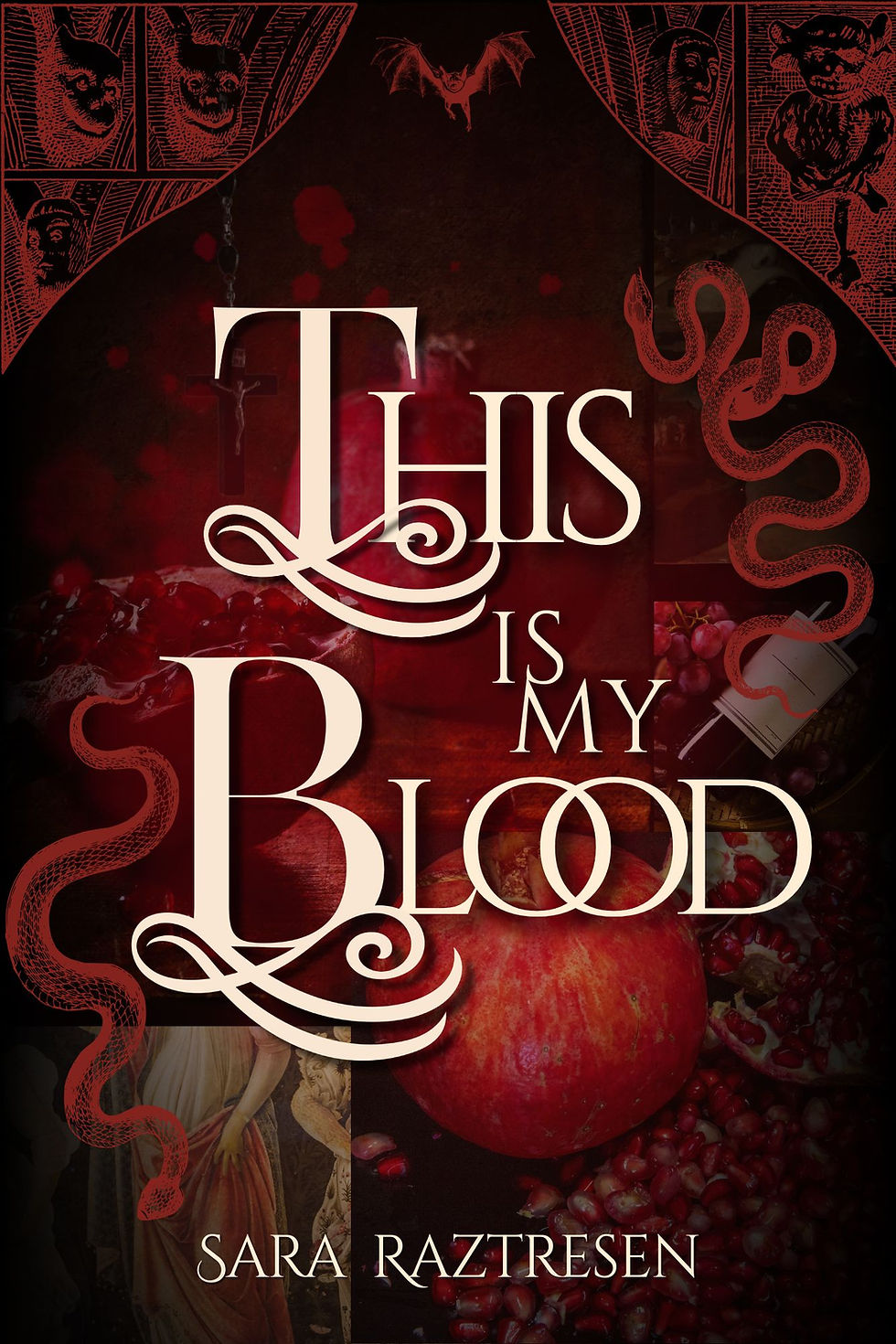
Because my latest book, This is My Blood, is finally here!
This book released on July 31st, 2026, and it is everything I wanted it to be. It was so much fun, and it brought me so much joy to write it, and so far, people are enjoying it already!
If you haven't gotten a copy yet, definitely consider checking it out—especially if you love stories about angels, demons, vampires, witches, and God Himself lol.
(Especially because from what I'm hearing so far... people really like this book! I'm so happy about that! ♥)
Anyway, here we are with August's actual questions this time. Everything is so busy now that I'm just glad to have gotten this out to everyone.
And remember, if you have questions, there's a Google form!
Now let's get into all this good conversation!
Why Do People Say Catholics Aren't Christians?
Why do some people categorize Catholics as "non-Christians"? where I'm from, they tend to categorize other denominations (Protestants, Born Again, Adventist, etc) as Christian, and Catholics as Roman Catholics alone. My confusion, I think, stems from the fact that we use the same-ish Bible and worship the same Christian God, but they tend to other themselves. Thank you and I hope the month treats you kindly! —Anonymous
Hi, there!
Short, cradle Catholic answer: because many (not all, but many) Protestants stripped everything cool out of their religion and are salty that some people still understand the function of ritual. Lmao.
Longer, serious answer (and let me be clear: my tone might be short, but I'm not mad at anyone for asking the question; it's a good question): because this country was built on largely Protestant denominations, all of which have had reason to have some emnity with either the Church of England (or Anglican church, as was the Puritan case), or Catholics, due to the Reformation and resulting Inquisition. This country's population is only 1/5th Catholic, and that Catholicism also doesn't quite ring of the cultural embedded-ness it does in European Catholic countries (like my mother's native Slovenia), so Catholicism often feels overly ritualistic, perhaps even pagan, to folks whose concept of church is Pastor Bob yapping about God even knows what for two hours. (Forgive my bitterness on the end there.)
But Catholicism has strict ritual structure, tools (like bells, candles, oils, holy water, etc.), doesn't shy away from imagery and statues (which Protestants often call idols and think Catholics worship), and has a lot of syncretic elements that pagan converts to Catholicism intertwined with the faith over a thousand years ago. It's a two thousand year old religion; it's going to look, and act, old. And Protestants, who are so very young in comparison, and who really took a beating to their understanding of ritual practice in the age of enlightenment, seem to view anything more involved than reading directly from the Bible as some kind of hidden witchcraft or devil worship, so they don't think Catholics are Christians.
Frankly, I think the typical Bible Belt mindset around Catholicism is irritating as fuck. As does anyone else that is Catholic or grew up Catholic. That would especially be why Catholics aren't prone to mingle with Protestants—especially given that the hostility you might get in some areas for being a Catholic is just as bad as the hostility you'd get for being a pagan, for all the aforementioned reasons. As someone who grew up in New England, though, where Catholicism is very much the norm, it is way more baked into our cultural fabric up here, and therefore not as much of a conscious thought. Catholic culture is also not about the whole "evangelizing" thing (which, to a lot of non-denoms and flashy evangelicals especially, seems to translate to being a public nuisance and doing nothing useful or charitable for anyone). Catholicism is about volunteering, being kind and community-minded, and actually focused on a relationship with God by not constantly butting their heads into other people's relationship with God and pointing fingers at "bad behavior."
It's just different. It's old, creaky, raw, and it's not something that people who think it's idolatry to have a statue of Mary in the garden would understand, so Catholics don't bother trying.
How Do We Decide What Denomination to Follow?
How do we reconcile all of these things, and not feeling like we fit neatly into one thing or another, be at theologically or culturally, and taking from a bunch of different sources? —Anonymous
Hi!
I dunno; how do you? The idea of having to try and fit yourself in any one box doesn't make sense to me, because if things are true, then they're true, and you ought to hold onto them, regardless of where they come from. I have plenty of beliefs that make me not fit neatly within the Episcopalian paradigm I now call home, but that doesn't make me any less a confirmed member of the Episcopal church. And when I find something I like in Orthodox or Catholic or Protestant theology, I snatch it and fit it into my worldview. When I find something from another religion that sounds right, I dig and see if a similar concept already exists in Christianity (as chances are, it does).
I think this question is born of this idea that you have to align yourself in some kind of faction, and the truth is that Christianity doesn't, and was never meant, to work that way. Many scholars and philosophers and theologians and mystics have all different kinds of ideas based on their studies and experiences, and they'll argue with each other all day long about which idea makes more sense, but that doesn't mean they have to make a whole new label for themselves or abandon beliefs that some abbot or bishop doesn't like. Why should you not be able to hold the writings of Mechthild, Merton, and MacDonald in your theology all at once? Why, if you feel the spirit inspiring their writings is true, would you ever discard a piece of truth because it comes from some different label?
If you really want to put yourself in a box, you can tally how many positions you hold on key Christian topics and see which denomination that sits you in (for example: do you believe in the Protestant sola scriptura thing, or are you a more Catholic/Episcopal combination of Scripture, tradition, and reason?). But there's no reason to do any of that. Just be, and learn all you can.
Biblical vs. Real God?
How is God actually vs how He is depicted in the Bible? —Ashly
Hey, Ashly!
This question is near impossible to answer. It's like asking how the ocean is vs. a drop of rain. You have to remember that the Bible is just a collection of humanity's experiences with this ineffable, infinite being we call God, and that because we are all products of our times, languages, cultures, histories, etc., we will filter that infinity and condense it into something we can understand, which often means our view of Him is warped by all those things that inform the lens we understand things from. Even then, God finds ways to subvert our expectations and challenge what we take for granted as "true."
When God says that nobody has seen His face and lived in the Old Testament, that's what I think it's really getting at: that we cannot get the full measure of His infinity and come out unscathed or mentally sound. So the God depicted in the Bible is, unfortunately, still just a glimpse—the quick passing of His back as we look on in awe—compared to His fullness.
What Does God Tell You About Abortion?
Since Massachusetts passed the new abortion bill, I’ve been seeing more pro-life content appearing on my social media feed (things like “pro-life” biblical skincare” advertisements,etc.). I have prayed to God about the situation, which side he is on and I believe he told me that he is not on any particular “side”, and wishes people would actually take care of both women and children and treat them with dignity. He also told me to be wary of a lot of “pro-life” campaigns since they usually aren’t actually pro-life, and a lot of them don’t actually take care of women, children, or babies. Was has God told you about this? Does this sound like something from God? (I think it does, but I want to see your thoughts). —Anonymous
Hi, there!
What a hot button topic. However, what you're hearing from God is exactly the situation. Many of these pro-"life" movements are actually just pro-"birth" and have no concept of what it means to actually care about life. If they did, they would also push for food security, quality education, community healthcare and vaccination, and proper social infrastructure that supports families and individuals.
I have people I respect who are pro-life, despite my being pro-choice, and that is because they are radically pro-life, in the fullest sense of advocating for restorative justice and prison reform, abolishing the death penalty, increasing social infrastructure (so using taxes for things like healthcare, childcare, schooling, public works and third spaces, etc.), and more, as well as promoting free and easy access to preventative birth control and sex ed. That is a type of pro-life I can get behind, because while I want the government out of medical decisions of any kind like this, I also agree that helping people avoid an often psychologically and physically taxing procedure in the first place is the way to go. More than that, the pro-choice movement has to also be about more than just giving people the choice to have an abortion, because that is only the stop-gap to the wider issue that needs addressing, which is the issue of why people get abortions in the first place.
(Hint: it's all the same things that all that social infrastructure would fix. Yet a lot of centrist Dems don't want that any more than the hyper pro-birth Republicans. Lol.)
The thing about God not being on any "side" is likely because of this situation, and also, the fact that a lot of people do a "cart-before-horse" maneuver with Scripture by deciding abortion is murder, then pointing to Thou Shall Not Kill™ as the reason God has "prohibited abortion." The reality is that you'd find just as much Scripture-Fodder to argue that God is team "Fuck Them Kids™," honestly. All this together is why this whole frenzy people whip themselves into over fetuses (or, rather, let exploitative politicians using culture wars as a convenient distraction) is ridiculous.
What Does God Think of Manifestation?
How does God feel about manifestation? Like, people doing and pursuing it? —Becky
Hey, Becky!
Let's first define what manifestation is. I think that'll help more than anything. Tchiki Davis of the Berkeley Wellness Institute gives a more strictly psychological approach:
The word ‘manifestation' means to create something or turn something from an idea into a reality. In psychology, manifestation generally means using our thoughts, feelings, and beliefs to bring something to our physical reality. But even this definition of manifestation doesn't fully get at what manifestation is.
So here we'll define manifestation as the conscious creation of the circumstances and outcomes that make for a fulfilling life.
And if we define it like that, then that just means... making plans and executing them, honestly. Breaking large goals down into small, actionable steps that carry us closer and closer to the big picture goal by the end of everything. That is the very essence of being alive, so that's great.
If we look at it from a more spiritual lens, we might get something different. Create Higher Vibrations (what a title) suggests that manifestation in the spiritual world is different than what Davis said:
At its core, spiritual manifestation involves using the power of your mind to bring your ideas to life. This process is deeply intertwined with concepts like the Law of Attraction and positive thinking...
While traditional mind-power practices emphasize using the subconscious mind to acquire specific objects or status, spiritual manifestation views external shifts as natural byproducts of inner spiritual alignment.
For some reason, this website cites Moses' trust in God during the burning bush situation as an example of spiritual manifestation. How they figure, I have no idea, but it does lead me into the thing I want you to consider, at least, which is: are you checking in with God when you manifest? Asking if the thing you're trying to manifest is worth the effort?
Because if the answer is no, then that is the real issue. The idea that your outer situation (or at least your perception of it) is linked to your spiritual alignment isn't entirely off base. If you're trying to manifest wealth, ask God what to do to get more money, and then you end up guided towards a practice of gratitude that makes you realize just how much fortune you already have (thus coming to view yourself as wealthy), then yay. If you're just sitting there trying to conjure a greater, more materialistic life out of thin air with no thought or concept to what God thinks or what He's trying to get you to do or work on, then you're in for a bad time.
Where to Start Learning About Demons?
What are some good beginner books to read about demons beyond the Lesser Key of Solomon for those interested in getting into it? —Anonymous
Hello!
Honestly, in my experience, books on demons themselves don't help as much as books on occult philosophy, theology, and mystic systems. Once you know the names of the 72 Goetic demons and what they do/what element they're associated with, that's basically all you need to get started actually investigating them. From there, you're looking for old grimoires with evocation instructions, or books on the Sephiroth vs. Qliphoth (the best of which I can recommend are Daniel C. Matt's The Essential Kabbalah and Thomas Karlsson's Qabalah, Qliphoth, & Goetic Magic). Just remember that Jewish mysticism (Kabbalah) is closed to people who aren't Jewish, and take Karlsson with several grains of salt when he starts saying all kinds of kooky shit about kundalini this or Olde Goddes™ that).
You can read exorcist accounts if you'd like, or visit occult forums of people who work with/worship demons (they often call themselves demonolaters). You could also look into the origins of specific demons (like Kind Asmodeus being the Zoroastrian Aeshm Daeva, or Belphegor potentially being an old Moabite god). None of these have specific books, but there are a lot of articles online and books on broader subjects around them.
What Does God's Justice Look Like if People Don't Go to Hell?
Hello again! I’ve been thinking about one of your past blogs in which someone asked if God loves/forgives everyone, even the people that do horrible things like murder. And how you say that Hell is just the home of demons, not a fiery pit for sinners. My question pertains to both.
if God is Justice, the God of the underdogs, the broken, etc., what does justice look like if Hell isn’t a place of punishment after all?
I suppose once we have moved on from Earth, none of these ‘trivial’ matters are of any relevance anymore. I also can’t help but feel that minimal or no punishment isn’t justice at all. Especially when some people get away with their crimes/injustices and don’t get held accountable in their life on earth, or even developing a sudden coincidental faith in Christianity to minimize what they’ve done and sweep it under the rug. What are your thoughts on this? —Anonymous
Hi!
Let me answer your question with a question: why does Justice have to be punitive?
When we stop viewing punitive justice as the only kind there is, then all of this starts making more sense. Things like restorative justice are just as powerful and healing for various parties. It's kind of why God is so big on the concept of us forgiving each other and ourselves as much as He forgives us.
Of course, the way some people use it—as if repentance is just saying "I'm Sorry™" and expecting everybody to forget what they've done—is not the way this kind of justice works. But you might think of the types of justice like this: if somebody litters, would an appropriate punishment be to break their hand, or to have them do a week of community service with the litter crew? In simple terms: is just hurting someone who hurt you justice, or petty vengeance?
The entire reason Jesus speaks against the "eye for an eye" ideal of His era is precisely because it traps people in a feedback loop of answering pain for pain. While originally, this idea was actually meant to limit and restrict the harm done (as if you took someone's hand, their family might take vengeance by taking your leg or something more to add insult to injury), and meant to put the power of judgement and punishment in the hands of a third party that can be more neutral and fair, the way Jesus denies it suggests that in fact, answering pain for pain at all is just stupid. Murdering the murderer of your loved one won't do anything to right the wrong that has happened or rehabilitate the murderer (who is still a human with that full human dignity); it won't bring anyone into reconciliation or open up the possibility for rebuilding previously ruined community bonds. It just makes two dead people and a wound in the hearts of those left behind that becomes a hardened scab. One that makes us cold and tough instead of loving.
There absolutely needs to be accountability for abuse and harm in this world, but that doesn't have to look like answering aggression with aggression. It can, and should (as per the entire concept of prison reform/abolition and restorative justice) look like helping rehabilitate offenders into functional members of their community. This could mean education, mental health resources, supervised reconciliation with victims, all kinds of things, but it does not mean just letting people say "sorry" and walk away. It means confronting that person with the full psychological and material weight of their actions (which, honestly, can sometimes be even more painful than anything else; guilt is a beast).
And more than that, just because people don't go to hell, doesn't mean there isn't any purification waiting for them before they see heaven. The "Lake of Fire" is the equivalent of a spiritual acid bath, and all of us, from the worst criminals to the best aids, are going to be dunked in that lake to sizzle off all the grime and muck of our errors in life. Some might sizzle a little longer than others, but none of us are free of sin, as you've no doubt heard. All of us need a little spiritual acid bath. And after that, with all the weight of our wrongs against each other burned away, all you'll be able to understand is Unity: with God, and with everyone else. Heaven isn't some game lobby where you have to walk around and see people you don't like; it's the sheer glory of being reunited with your Maker and understanding the fount of Love itself.
How Do I Deal with Deconstruction and Dissonance?
I feel this pull to learn more and more, however when I think about actually applying this religion to myself and incorporating it into my life I feel this sort of cognitive dissonance about it where it just doesn't feel right. What I'm having trouble determining is if that feeling is a sign that it's not for me, or simply a sign that I still have more work to do on my deconstruction. As someone who is not used to deity work, I don't yet feel I have the skills to ask God about it and actually receive an answer. Do you have any advice for folks coming into this from neither a Christian or pagan background to determine if this is part of their journey? —Anonymous
Hi!
It sounds like you actually have two conflicting impulses here, so it's up to you to decide if these impulses actually conflict, or if they're part of the same directive. On the one hand, you want to learn more. On the other, you're hesitant to apply what you already have learned.
The solution sounds easy to me. Learn more. Read widely, of various Christian traditions, and see the breadth and scope of which the people of this religion occupy. The variance will shock you, especially if you've only ever understood Christianity one way as an outsider looking at the strange cultural blanket Americans have made one type of Christianity into. And as you learn more, you may find that the scale of your impulses tips one way or another: maybe you find it all so fascinating and resonate with it to the point of finding a specific school of thought to call home within the religion, and thus, confident in your knowledge, you can begin incorporating it. Or perhaps what you learn repulses you, and you realize you really don't want any part of this faith at all. Or maybe you're happy taking a couple pieces you like and leaving the rest, with no need to call yourself Christian.
Any one of these things, and more, is possible. But if ever you're unsure, then that can only be a sign that you simply don't know enough yet to make a decision. That's all.
Ask Your Questions!
Remember, all your questions can go to this Google form, so don't hesitate to reach out! I'm looking forward to seeing what questions people have in the future, and I hope this has been a helpful read! Thank you everyone who participated!
—Sara

Sara Raztresen is a Slovene-American writer, screenwriter, and Christian witch. Her fantasy works draw heavily on the wisdom she gathers from her own personal and spiritual experience, and her spiritual practice borrows much of the whimsy and wonder that modern society has relegated to fairy-and-folktale. Her goal is to help people regain their spiritual footing and discover God through a new (yet old) lens of mysticism.
Comments